Travel notes: Japan
kawaii and control

Long overdue. Few months ago, I travelled to Japan for a couple of weeks. I am not here to do a cultural deep-dive, I certainly don’t have the knowledge necessary for it and as someone that despises the internet analysts wannabe, let me try not to fall in that trap. But that trip definitely sparked a lot of questioning in me, based on my observations. Disclaimer: this is deeply subjective.
Roaming through the streets of Tokyo, I definitely wondered a lot about our (us humans) relationship to animals. It was very destabilising to see a capybara right there, in a cafe, in central Tokyo. “why am I seeing a capybara right now” ? it has no business being here. To my understanding, the Japanese society has a very specific approach to animals and to those that are deemed cute. Well, it is broader than that, “Kawaii” culture.
I wonder if this obsession with cuteness is not also about the need to control. Having wild or farm animals in a city cafe, all for the money making entertainment industry. We can agree that there are many more ways to enjoy nature without having to control it. And I could not stop but wonder if that wasn’t just me projecting a more western approach to pets? Well, London also has dog and cats cafes, puppy yoga and so on and so forth. What I perceived as deemed acceptable there was definitely on a more extreme spot of the spectrum.
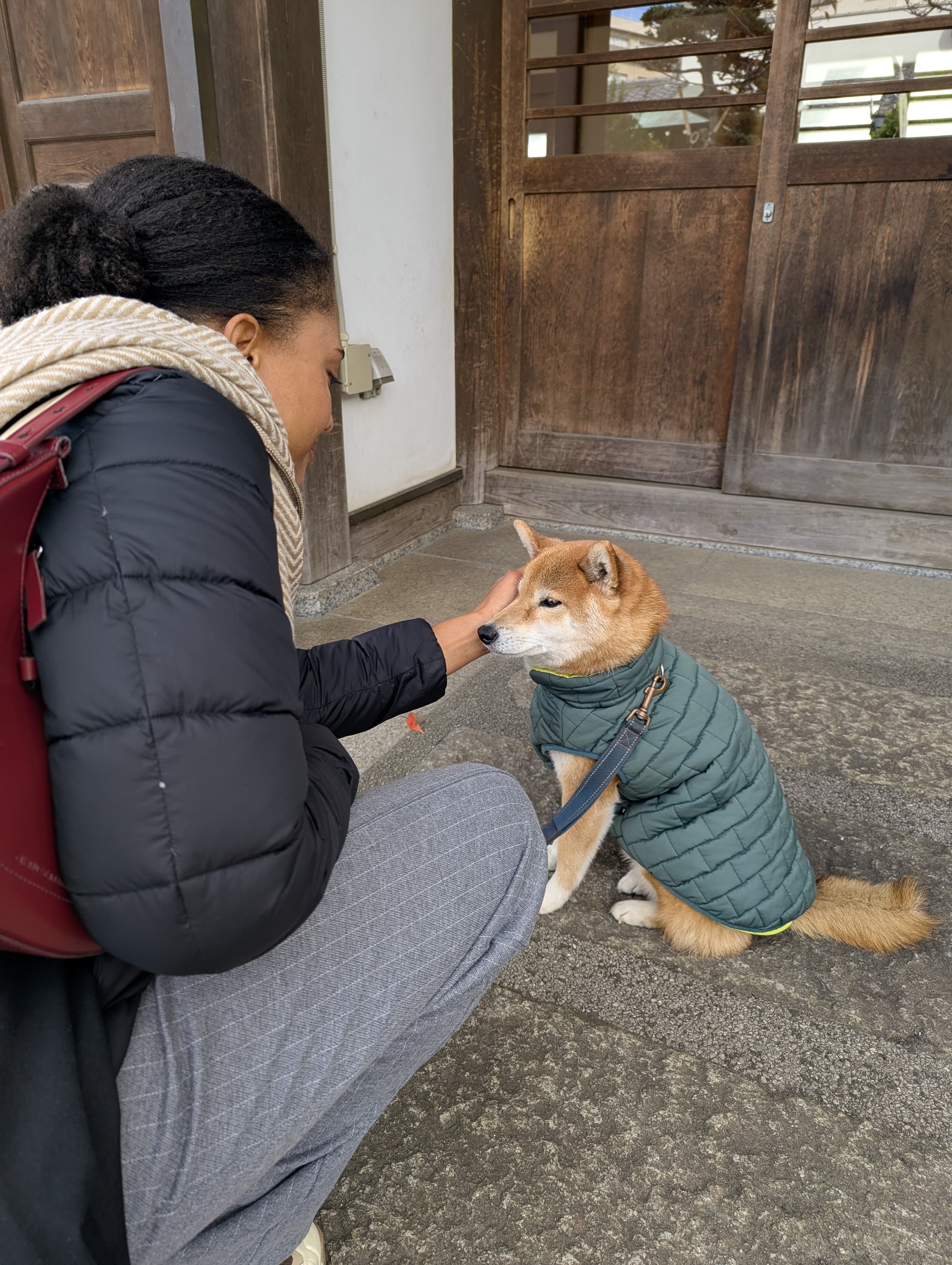
I also witnessed a different relationship with animals, one rooted in respect rather than extraction. Whenever I saw someone walking their dog, I could sense genuine care. Some animals are linked to spirituality or become temple mascots. I travelled about an hour to visit Subaru, the in-house dog at Kantsuji Temple. Not all human-animal relationships in Tokyo felt about control. Some, like Subaru’s presence at the temple, felt sacred.
The obsession with cuteness is probably the common thread I have observed. Food, clothes, decors..and well women. There is an unsettling expectation for women to be small, cute, smile, speak with a high pitch voice, to me, it almost felt infantilising. For a megapolis like Tokyo, safety is definitely one of its feature. And as a woman I believe you can feel fairly safe there. Unfortunately, it is not perfect. The existence of female only carriages on public transport and the abundance of personal alarms and self-defense tools sold in stores tells a different story.
A few days before my trip to Japan, I was reading about Tiphaine Véron, a french citizen that disappeared since July 2018 within the first days of her trip to Japan. To this day, classified as a cold case, her family has no news. I understand that this can happen in any country. But Japan was definitely a place where I thought the amount of security cameras would not lead to a cold case. Unfortunately, it is a reminder that solo-travelling for a woman is a risky adventure anywhere on the planet (but please don’t let that stop you from travelling!). I tried to read and learn from Japanese women about their experience in their society. I won’t repeat stats here, they are scary regardless of the country I end up checking it for. No, my observation during my trip there was more around the duality of expectations towards women. I read many blogs by Japanese women talking about the high expectations the society has for them, mostly denying their own need for humanity and general pleasure. What a woman wants or needs comes only after she has fulfilled her duty to society aka serve a man and make babies. We can safely say that men’s obsession with controlling women knows no border. It echoes the male loneliness epidemic, widely caused by patriarchy and well..men themselves. I witnessed that loneliness in Tokyo. After work hours I could see so many people walking alone, eating alone and not always in a “I am enjoying myself” manner. It was sad to witness. Big cities are often associated with loneliness, and we hear so much now about community and intentionally connecting with others…and it’s not something that is foreign to Japan. From what I read, community is a big part of their culture.
Where my observations did bring me to, is the need to control women, control our bodies and how we show up. Women are often carrying the invisible load of community. They are the nurturers of community gathering, cooking and scheduling. So in a society where women are opting out of traditional family duties—because the burden has become unbearable—the social fabric frays. Loneliness becomes visible. As a woman, I see the “cuteness”, appearing smaller, vulnerable and in total submission as oppression. Something I also see in anime culture; I will never not feel uncomfortable in front of the figurines representing female characters…iykyk.
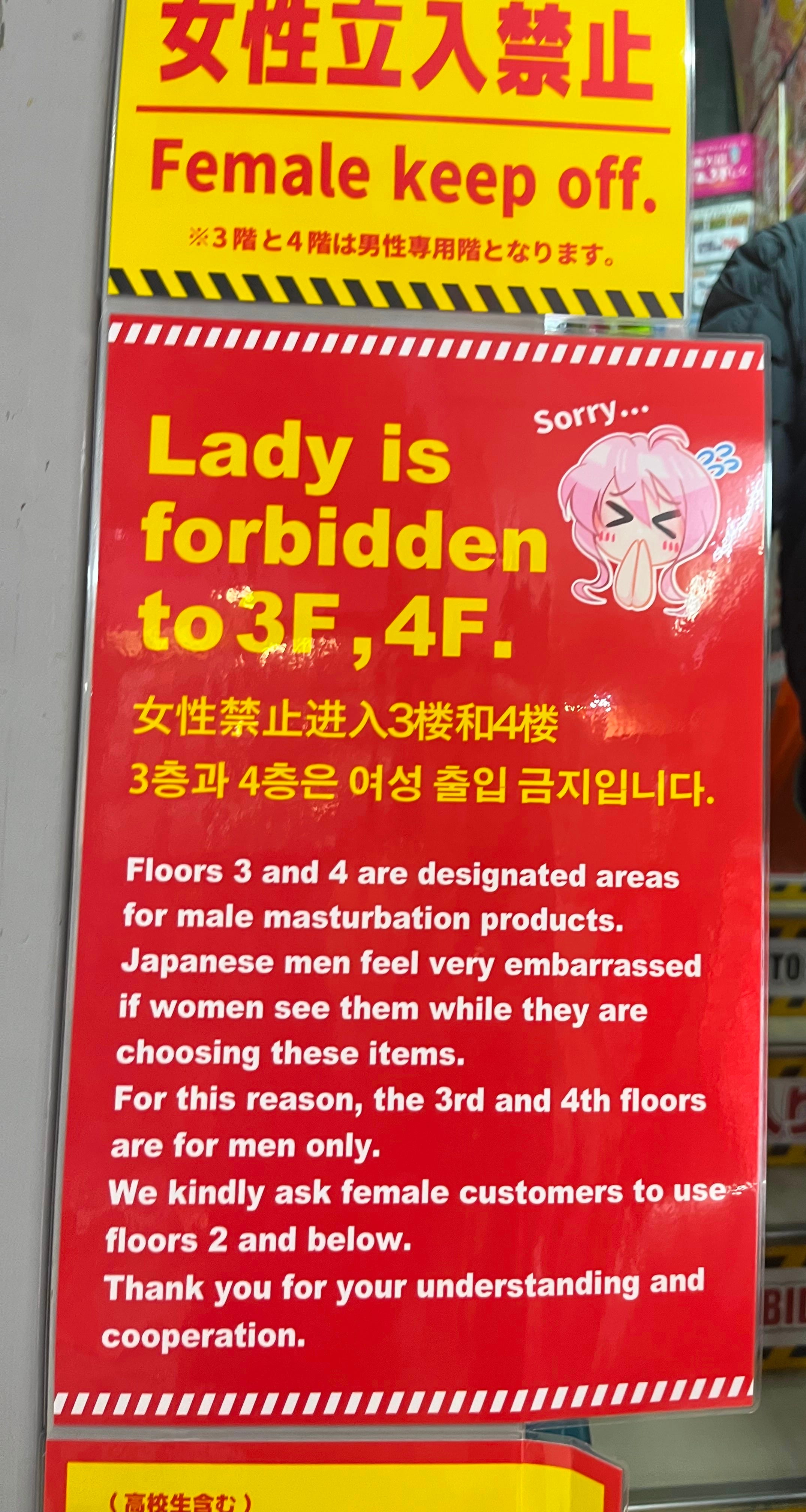
And this appeared in everything. But the most ridiculous example I stumbled across was in the adult shops. There were floors for couples or more general and specific ones for men. And women were asked to keep off those floors, so the guys shopping there would not feel ashamed… I understand wanting privacy, but if you are buying things that are dehumanising the female body, please don’t hide. Let’s get you therapy.
As I was preparing my trip to Japan, instagram flooded me with Japan related content. From recos to honestly a bit of a sick obsession for Japan that only westerners can display. And of course, the Kawaii obsession, the girly aesthetics, the anime subculture. It was all very well romanticised. I know that social media is not real life, but as a woman I do feel like our voice is often the one put on volume 0. And I am talking about our experiences as a whole, from existing in a certain society to having the intersectionality to observe our situations. The charm, the cuteness and the aesthetics had a strong aftertaste for me. Cuteness isn’t neutral. Not when it’s imposed, when it’s designed and certainly not when there is a clear gendered divide of who needs to submit and who is profiting.